
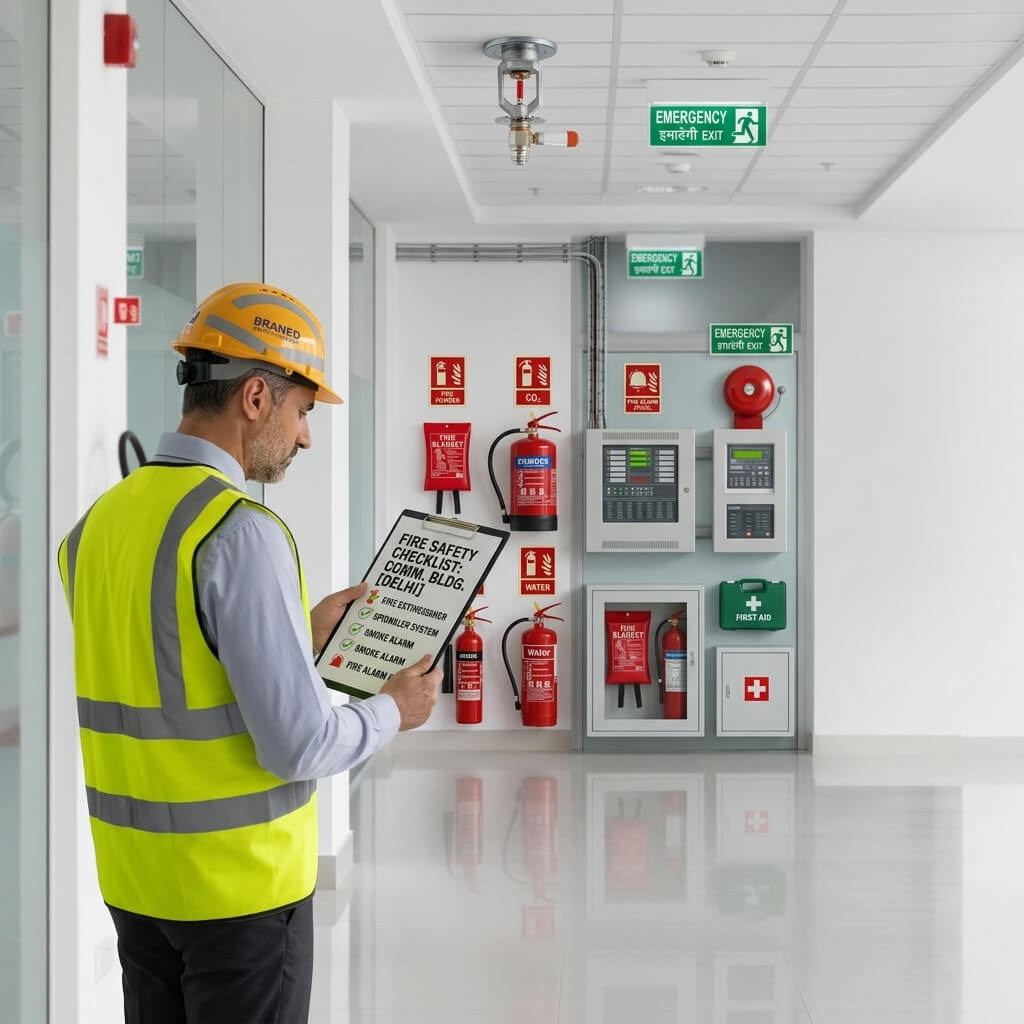
Fire safety is not just a legal requirement for commercial buildings in India, it is a responsibility. Offices, factories, shopping complexes, schools, hospitals, and warehouses handle large numbers of people and valuable assets every day. A small electrical fault or unnoticed hazard can quickly turn into a serious emergency. That is why having a proper fire safety checklist for commercial buildings is essential.
If you own or manage a commercial property, here is a practical and easy-to-follow guide to improve your fire safety system and ensure compliance with Indian safety standards.
- Install a Reliable Fire Alarm System
A properly installed fire alarm system is the first line of defense. Early detection can prevent major damage and save lives. Smoke detectors, heat detectors, and manual call points should be installed across all floors and high-risk areas such as electrical rooms and kitchens.
Regular testing of your fire detection system is equally important. In India, commercial buildings must comply with local fire department guidelines and National Building Code norms.
- Maintain Fire Extinguishers
Every commercial building must have accessible and working fire extinguishers. However, simply installing them is not enough.
Make sure:
- The correct type of extinguisher is installed for specific fire risks
- Extinguishers are easily accessible and clearly marked
- They are inspected and refilled regularly
Different areas require different extinguishers. For example, electrical panels need CO2 extinguishers, while office areas may require water or ABC type extinguishers. Regular inspection is a crucial part of any commercial fire safety checklist.
- Ensure Proper Fire Exit Planning
Clear and accessible fire exits are mandatory for commercial buildings in India. Exit doors should never be blocked or locked during working hours.
Check the following:
- Emergency exit signs are illuminated
- Staircases are free from obstacles
- Exit routes are clearly marked
- Emergency lighting works during power cuts
Proper evacuation planning is one of the most important aspects of fire safety compliance in India.
- Install Fire Sprinkler Systems
A well-designed fire sprinkler system can control a fire before it spreads. Sprinklers are especially important in warehouses, shopping malls, and large office spaces.
Automatic sprinkler systems activate when heat levels rise beyond a certain point. This quick response reduces property damage and gives occupants more time to evacuate safely.
- Electrical Safety Checks
Electrical faults are one of the leading causes of commercial fires in India. Regular inspection of wiring, distribution boards, and heavy equipment is essential.
Include these steps in your fire risk assessment:
- Avoid overloading power sockets
- Replace damaged cables immediately
- Ensure proper earthing
- Schedule periodic electrical audits
Preventive maintenance can significantly reduce fire hazards in commercial spaces.
- Conduct Regular Fire Drills
Even the best fire safety system will fail if employees do not know how to respond during an emergency. Conducting regular fire drills helps staff understand evacuation routes and emergency procedures.
Train employees on:
- How to use a fire extinguisher
- How to raise an alarm
- Where to assemble after evacuation
In India, commercial establishments are encouraged to conduct periodic mock drills to ensure preparedness.
- Store Flammable Materials Safely
If your commercial building handles chemicals, fuel, or other flammable materials, proper storage is critical.
Ensure:
- Flammable items are stored in designated areas
- Adequate ventilation is maintained
- Warning signs are displayed
- Safety data sheets are available
Safe storage reduces the risk of accidental ignition and improves overall commercial building fire safety.
- Keep Emergency Contacts Updated
Display emergency contact numbers clearly within the building. This includes:
- Local fire brigade
- Building management
- Emergency response team
Quick access to contact details can save valuable time during an emergency.
- Obtain Fire Safety Certification
In India, commercial properties must obtain a fire safety certificate from the local fire department. This ensures that the building meets required safety standards.
Regular renewal and inspection are important to maintain compliance and avoid legal penalties.
Final Thoughts
Fire safety in commercial buildings is not a one-time task. It requires continuous monitoring, maintenance, and awareness. A well-maintained fire protection system, regular inspections, trained staff, and proper planning together create a safe working environment.
For commercial property owners in India, investing in a strong fire safety solution is not just about following regulations. It is about protecting lives, assets, and business continuity.
By following this simple fire safety checklist for commercial buildings, you can reduce risks and ensure your premises remain safe and secure at all times.
FAQs
- Why is fire safety important for commercial buildings in India?
Fire safety is essential to protect employees, customers, property, and business operations. It also ensures compliance with Indian fire safety regulations and avoids legal penalties.
- What are the mandatory fire safety requirements for commercial buildings?
Commercial buildings must have a fire alarm system, fire extinguishers, emergency exits, sprinkler systems where required, and a valid fire safety certificate from the local fire department.
- How often should fire safety equipment be inspected?
Fire extinguishers should be inspected monthly and serviced annually. Fire alarm systems and sprinklers should be tested periodically as per safety guidelines and local regulations.
- Is a fire safety certificate compulsory in India?
Yes, most commercial buildings in India must obtain a fire safety certificate from the local fire authority to confirm compliance with safety norms.
- What is included in a fire risk assessment?
A fire risk assessment identifies potential fire hazards, evaluates risks, checks safety equipment, and recommends preventive measures to improve building fire safety.
- How can businesses improve fire safety awareness among employees?
Regular fire drills, employee training sessions, and clear emergency evacuation plans help improve preparedness and response during emergencies.
- What type of fire extinguisher is used in offices?
ABC type fire extinguishers are commonly used in offices. CO2 extinguishers are recommended for electrical equipment areas.
- How often should fire drills be conducted in commercial buildings?
Fire drills should be conducted at least once or twice a year, depending on the building size and local regulations.