
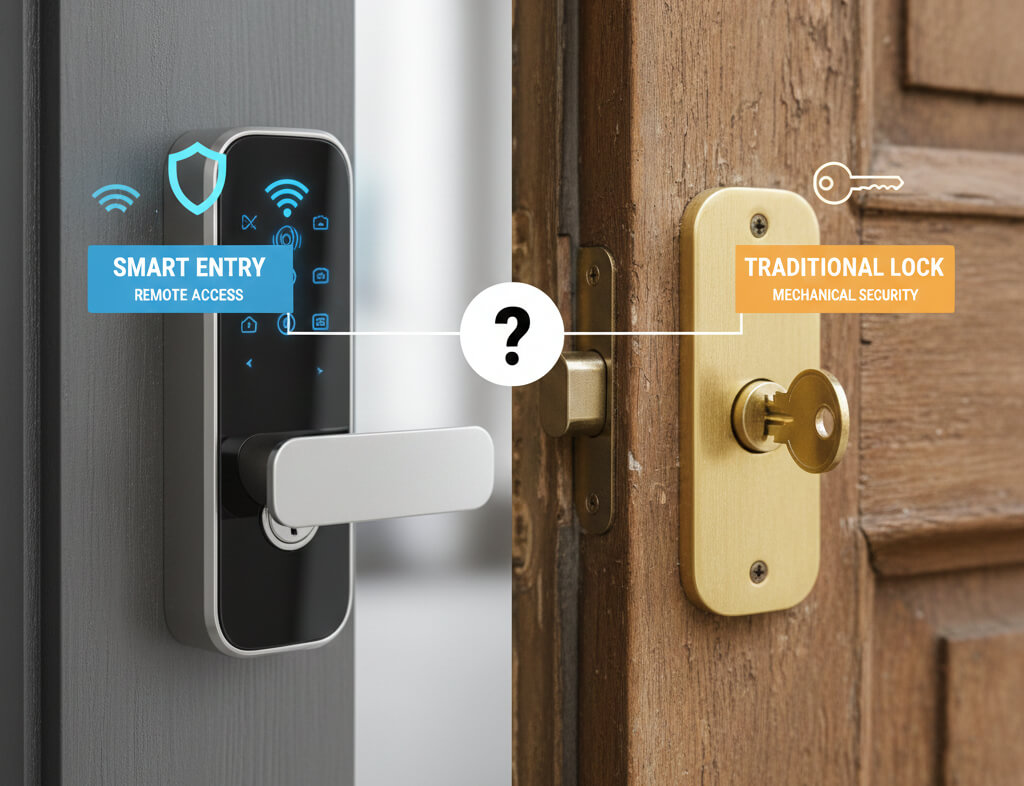
Home security has evolved significantly in India over the last few years. From basic padlocks and door bolts to advanced digital systems, homeowners now have more choices than ever. One of the most common questions people ask today is: Smart lock vs traditional lock, which is safer?
If you are planning to upgrade your home security system, understanding the difference between a smart door lock and a traditional lock can help you make the right decision.
What is a Traditional Lock?
A traditional lock is the standard key-based locking system that has been used for decades. It includes mechanical locks such as deadbolts, mortise locks, and padlocks. These locks operate with a physical key and do not require electricity or internet connectivity.
Advantages of Traditional Locks
- Simple and Reliable
Traditional locks are straightforward and easy to use. They do not depend on batteries, WiFi, or mobile apps.
- Affordable Option
For many Indian households, traditional locks are a cost-effective security solution.
- No Risk of Digital Hacking
Since they are purely mechanical, traditional locks are not vulnerable to cyber threats.
Disadvantages of Traditional Locks
- Key Management Issues
Keys can be lost, stolen, or duplicated without your knowledge. This creates a security risk.
- No Remote Access
You cannot monitor or control a traditional lock remotely.
- Limited Security Features
Standard locks do not provide activity tracking, alerts, or integration with a home automation system.
What is a Smart Lock?
A smart lock for home is a digital locking system that allows you to lock and unlock your door using a PIN, fingerprint, RFID card, or mobile app. Many models also support remote access and integration with a smart home security system.
In India, smart locks are becoming popular in apartments, villas, and modern office spaces.
Advantages of Smart Locks
- Keyless Convenience
With a digital door lock, you do not have to worry about losing keys. You can unlock the door using a fingerprint, password, or smartphone.
- Remote Access and Monitoring
Most smart locks allow you to monitor entry and exit activity. You can even grant temporary access to guests or service staff.
- Enhanced Security Features
Many electronic door locks come with auto-locking features, tamper alerts, and intrusion alarms.
- Integration with CCTV and Security Systems
Smart locks can work alongside your CCTV camera system and other security devices, creating a complete home security solution in India.
Disadvantages of Smart Locks
- Higher Initial Cost
Smart locks are generally more expensive than traditional locks.
- Power Dependency
They rely on batteries or electricity. If not maintained properly, battery failure can cause inconvenience.
- Risk of Technical Issues
Like any electronic device, a smart lock may face technical glitches or connectivity problems.
Which is Safer for Indian Homes?
When comparing smart lock vs traditional lock, safety depends on usage and quality.
A high-quality traditional deadbolt can offer strong physical protection. However, it lacks advanced monitoring and control features.
On the other hand, a good smart door lock in India provides multiple layers of security such as biometric authentication, PIN access, and real-time alerts. It reduces the risk of unauthorized key duplication and improves access control.
For independent houses and urban apartments, combining a digital door lock with a CCTV security system creates stronger overall protection.
What Should You Choose?
If you prefer simplicity, low maintenance, and budget-friendly options, a traditional lock may be sufficient.
If you value convenience, remote monitoring, and modern security features, investing in a smart lock for home security can be a smart decision.
In many Indian households, a combination of both works best. Installing a reliable smart lock along with a secondary mechanical lock can provide added peace of mind.
Final Thoughts
Security is not just about locking a door. It is about choosing the right solution for your lifestyle and safety needs. Both traditional locks and smart locks have their advantages. The key is to invest in quality products and ensure proper installation.
As technology continues to grow in India, smart security solutions are becoming more accessible. Whether you choose a traditional system or upgrade to a smart home security system, the ultimate goal is the same: protecting your family and property.
FAQs
- Is a smart lock safer than a traditional lock?
A smart lock offers advanced features like biometric access, PIN protection, and activity tracking. However, both options can be safe if you choose high-quality products and ensure proper installation.
- Can smart locks be hacked?
Like any connected device, smart locks may be vulnerable if not secured properly. Choosing trusted brands and using strong passwords reduces the risk.
- Do smart locks work during power cuts?
Most smart locks operate on batteries and continue working during power cuts. Many models also provide low-battery alerts.
- Are smart locks suitable for Indian homes?
Yes, smart locks are becoming increasingly popular in Indian apartments and independent houses due to convenience and enhanced security features.
- What happens if the smart lock battery dies?
Most smart locks give advance low-battery notifications. Many models also include emergency key access or external power backup options.
- Are traditional locks still reliable?
Yes, high-quality traditional locks such as deadbolts provide strong mechanical security and remain a reliable choice for many homes.
- Can smart locks be integrated with CCTV systems?
Yes, many smart locks can integrate with CCTV camera systems and other smart home security devices for enhanced protection.
- Which is more cost-effective, smart lock or traditional lock?
Traditional locks are generally more affordable initially. Smart locks cost more but offer advanced security and convenience features.